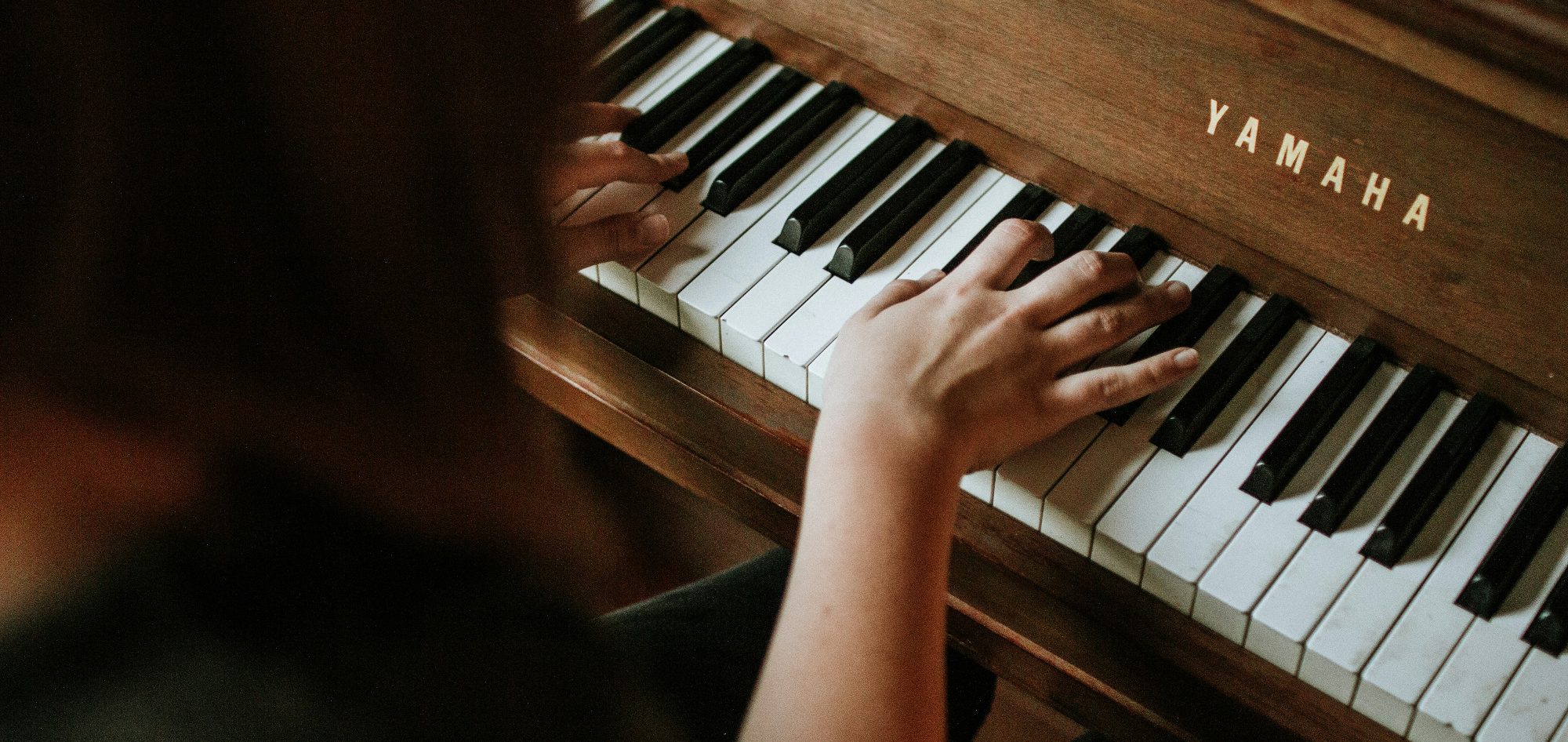
The Top 5 Beginner Piano Mistakes
(and How to Avoid Them)
If you’re at the start of your piano-learning journey, we’re here to set you on the right foot. We’ve compiled our greatest-hits list of the top five beginner piano mistakes — don’t worry, we’ve all been there. More importantly, we’ll show you how to avoid them without sucking the joy out of learning the piano.
1. Ignoring posture and hand position
If you’re new to the piano, your first reaction might be to adopt a slouched posture (it feels more comfortable, right?), lock your wrists, place your fingers flat on the keys, or nervously form “claw hands”.
So what’s the problem? Quite simply, these habits make everything harder. Trust us — adopting the correct approach early on will make life much easier as you progress.
Poor posture and hand position will slow you down, limit control, and can even cause strain or pain over time. Instead:
- Sit with your forearms roughly level with the keys and your elbows at a right angle
- Keep your wrists loose and slightly raised
- Curve your fingers naturally, as if you’re holding a small ball
- Check in with your body regularly — tension is the enemy
Top tip: Spend 30 seconds setting up good posture before you play. It will pay dividends.
2. Playing too fast, too soon
It’s tempting to rush through pieces to sound impressive — or simply because you’re eager to make progress. But remember: slow and steady wins the race when learning piano.
Playing too fast hides mistakes instead of fixing them, which means bad habits quickly become ingrained. Here’s how to avoid that trap:
- Slow it right down — if you can’t play it slowly without mistakes, you can’t really play it
yet - A metronome can help, but sometimes it's better to tap your feet or count slowly in your head and keep that going while practicing.
- Only increase the speed once you can play cleanly and without tension
Top tip: Learn one hand at a time before putting them together.
3. Not counting or understanding rhythm
Rhythm is the backbone of music. Without it, even the right notes can sound wrong. Playing purely “by feel” and guessing the timing is a very common beginner piano mistake.
To build strong rhythm skills:
- Count out loud at first (yes, really!)
- Clap rhythms before playing them
- Tap your foot or gently sway to feel the pulse
Once rhythm clicks, everything else starts to fall into place.
4. Looking at your hands instead of the music
It’s natural to want to watch your fingers when you’re starting out. However, learning piano is much like learning to touch-type. Constantly looking down slows your reading progress, makes note transitions harder, and means you’re more likely to miss mistakes in the music.
Start building good habits early:
- Practise short passages without looking down
- Learn to feel key groups — the black keys are your landmarks
- Trust your fingers — they’re smarter than you think
It can feel daunting at first, but this skill massively boosts confidence and overall playing quality.
5. Practising mindlessly
We’ve all done it — playing the same piece from start to finish on repeat, hoping it magically improves. Unfortunately, this often leads to repeated mistakes, frustration, stalled progress, and the temptation to give up.
To keep piano practice effective and enjoyable:
- Break music into small sections
- Isolate tricky bars and fix them properly
- Practise with a clear goal, for example: “Today I’ll work on the left-hand rhythm in bars 1–
5”
Ready to begin?
Beginner piano isn’t about talent — it’s about building good habits. Get these five things right early, and you’ll progress faster, sound better, and enjoy learning the piano far more.
What's more, Mr Keyz is here for you every step of the way. Check out our library of blog posts, video tutorials, courses and scores. Join us over on our YouTube channel for tutorials of the most popular ABRSM pieces when you're ready to take on your exams. There's heaps of fun stuff in enjoy too.